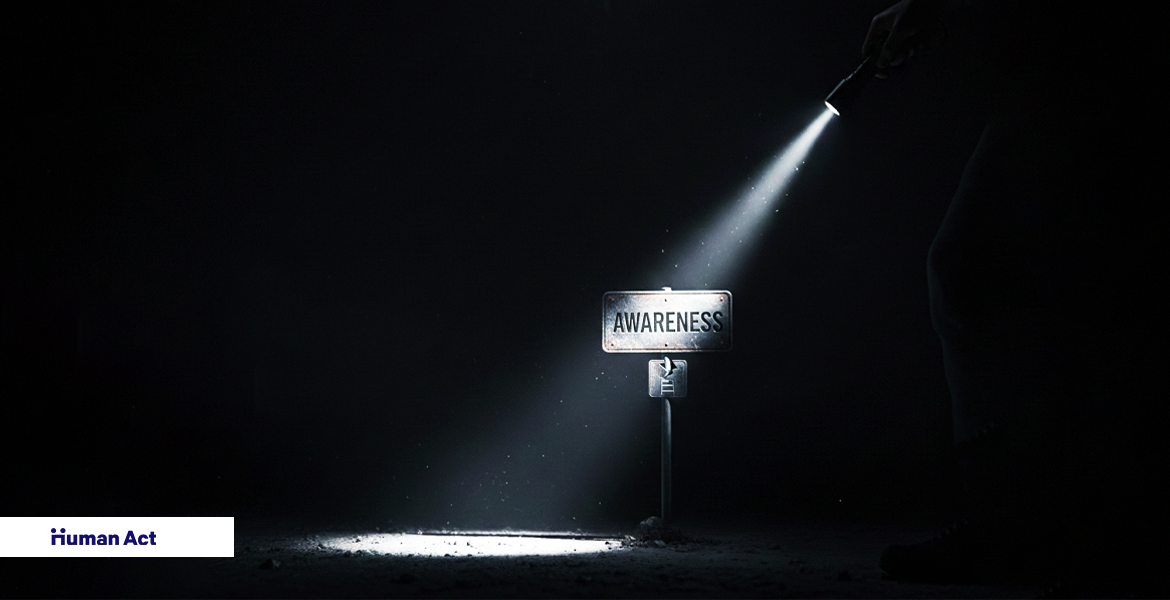
From knowledge to action, let’s see how awareness has the power to change the world!
Most of us move through life on habits and borrowed beliefs, repeating old patterns without ever noticing the frame we are stuck inside. When awareness comes in, that frame cracks.
It pulls us out of autopilot and gives us back the ability to truly see ourselves, others, and the world. In other words, awareness helps you make better choices.
Awareness is where curiosity wakes up, creativity begins to flow, and compassion becomes possible. Every meaningful change, whether personal or collective, starts from this simple shift in perception.
Awareness is not a fancy idea. It is a powerful tool that affects every part of our life. Every choice we make, every belief we have, and every step we take starts with a logical act called awareness.
When we are not aware, we act without thinking. When we are aware, we can make better choices and see the path ahead more clearly.
Awareness can change how people think and act. Research shows that public campaigns improve knowledge, influence attitudes, and even change behavior. For example, studies of mental health campaigns show that awareness online can increase understanding, empathy, and real-life actions.
The same is true for economic and social issues. Once people know more, they start to care more, and caring is where action begins. This is why the Human Act focuses on raising awareness through content, stories, and media: it is the first step toward meaningful change.
Awareness is the first requirement for any kind of social change. When people do not know a problem exists, they cannot respond to it, support solutions, or pressure institutions to take action. Many global issues like inequality, tax injustice, poverty, and human rights violations continue not because people do not care, but because they often do not see what is happening.
This is why awareness has an essential role:
In today’s world, most information spreads through media. When an organization invests in content creation, it is simply choosing the most effective communication channel available. People spend a large part of their daily lives online, and that is where they receive most of their information. If a message does not reach people where they already are, it remains unnoticed.
Some people become aware of an issue but still choose not to act. Sometimes awareness reaches only those who already share the same views. And when an issue is not communicated clearly, it can lead to misunderstanding or confusion.
That is why awareness should not remain at the level of knowing. It needs to guide people toward thoughtful responses and meaningful actions, such as reflection, dialogue, participation, or support for change.
Despite these limitations, awareness remains necessary:
When organizations like the Human Act Foundation focus on awareness, they are building the foundation for long-term change. They collect information, present it in a clear way, and make it easier for people to engage with issues that matter. This work is not a final solution, but it is an essential starting point.
Awareness does not solve everything, but nothing can be solved without it.
Awareness helps us take charge of our lives instead of reacting without thinking. It allows us to:
Awareness exists so we can think and act according to our own informed beliefs, not simply how others try to guide us.
People often feel they know enough because they read news, use social media, or hear stories from others. But hearing something is not the same as being aware!
Knowing is hearing, but awareness is understanding, thinking, and taking action.
Human Act believes that real change cannot happen without awareness. If people do not understand what is going on, how can they take action?
Human Act focuses on raising awareness in several ways, such as:
History shows that raising awareness has played a fundamental role in transforming people’s lives, from individual change to social and political revolutions. Its impact can be observed on several levels.
Awareness helps people understand themselves and their environment. Informed individuals make better choices. For instance, The abolition of slavery in the 18th–19th centuries relied on books, speeches, and articles to shift public opinion and inspire legal reform.
Knowing about inequality and injustice empowers people to act. Revolutions and reforms, like the French Revolution or the U.S. Civil Rights Movement, depended on spreading information through the media to mobilize citizens.
Awareness campaigns improve public health and save lives. Vaccinations, hygiene education, and disease prevention efforts show how knowledge can change everyday life.
Understanding rights, taxes, and financial opportunities strengthens societies. Worker rights campaigns and financial literacy education have helped people make smarter economic decisions.
The internet and social media spread awareness faster than ever. Today, global movements gain attention because people can access and share information instantly.
Awareness is the engine of change. Every improvement in health, justice, or freedom starts with seeing clearly and understanding deeply.
Awareness is the foundation of all meaningful change. It transforms passive knowledge into understanding, sparks curiosity, and empowers action. From personal growth to social reform, from public health to global movements, every step forward begins when people truly see and understand the world around them.
Without awareness, even the best intentions remain dormant. But with it, individuals and societies can make informed choices, challenge injustices, and create a better future for all.
"*" indicates required fields

ActionAid Denmark is a movement that fights for a more just and sustainable world. Supporting youths in developing their voice and applying pressure on those in power.

Stay Informed and Inspired!
"*" indicates required fields
Embrace our newsletter to unite behind traditional philanthropy and champion wealth taxation. Get exclusive insights, impactful stories, and policy updates. Join us in reshaping a fairer future. Subscribe now!