
Is the American Dream Dead? How Inequality Changed Everything
For a long time, the American Dream was a simple promise: work hard, and you can have a good job, a house, and a better future for your kids.
Today, many people feel that promise is breaking. More and more people talk about the death of the American Dream, and the numbers help explain why. Economic inequality in America has grown for decades. A few people have gained a lot, while many others have not.
This blog looks at how the American Dream changed and whether it is really gone.
What Was the American Dream Supposed to Be?
The phrase “American Dream” became popular in 1931. A writer named James Truslow Adams used them in his book “The Epic of America.” He meant a country where anyone can grow and succeed, no matter where they were born or how much money their family has. The idea is older than that. Early settlers wanted freedom, farmers wanted land, and immigrants came to build a new life.
After World War II, the American Dream became easier to picture. Wages were rising, and houses were still affordable. The government also supported soldiers by helping them attend college and buy homes. The dream turned into a simple list:
- A steady job
- A house
- A car
- College for kids
- Safe retirement
The history of the American Dream has two parts: fairness and a good standard of living that many people could reach. When life gets harder, people start to doubt the first part too. That is why the death of the American Dream is such a big topic today.
The Promise: Work Hard, Move Up, Build a Better Life
The promise had three parts:
- Work hard and you get rewarded.
- Each generation lives better than the one before.
- Where you start in life does not decide where you end up.
This was the promised upward mobility that America has talked about for 100 years. For a long time, it worked. A well-known 2017 study by economist Raj Chetty and his team found that about 90 out of 100 children born in 1940 earned more money than their parents. For children born in 1980, it was only about 50 out of 100. Social mobility is still possible, but the chance of earning more than your parents is now like a coin flip. People who talk about the death of the American Dream often point to this number first.
Other countries do better. Research by economist Miles Corak shows that countries with less inequality, like Denmark, often have more people moving up. Economic inequality in America matters because it starts early. Families with less money have fewer chances from the very beginning.
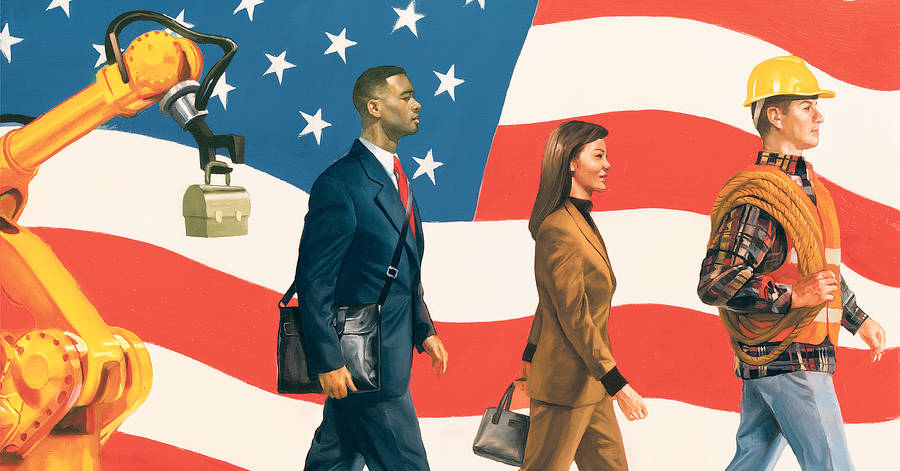
The Reality: Costs Rise, Wages Stall, Dreams Fade
Data from the Federal Reserve shows that the richest 1% of American families own about 30 percent of all the wealth. The poorest half owns only a few percent. This wealth gap keeps growing because money makes more money. Rich families can pass money to their children, pay for better schools, and live in safer areas. Wealth inequality grows over time and economic inequality in America repeats itself from parents to children. At the same time, life got more expensive:
- Pay: The Economic Policy Institute says workers have become much more productive since the late 1970s, but their pay grew far more slowly. Most of the extra money went to people at the top.
- Houses: In the 1980s, a typical house cost about three times a family’s yearly income. Now it is more than five times!
- Other costs: Childcare, health care, and college cost more than before. Also, student loans add up to about $1.7 trillion.
A person can work full time and still not reach the old dream. For people who do these sums every month, the death of the American Dream feels very real.
Why Younger American Generations Feel Betrayed by the System
Economic inequality in America feels very real to young people. This is a real-world frame of the Gen Z economy:
- Rent takes a big part of each paycheck.
- Many jobs are short-term or gig work.
- New technology like AI makes first jobs less certain.
Many young people feel betrayed because they did what they were told. They studied and worked hard, but the rewards came late or never. Surveys from Pew and Gallup show that fewer Americans now believe their children will be better off than they are. When young workers say the death of the American Dream has already happened, they are talking about their daily experience of the economy.
Is the American Dream Dead or Just Changing?
Many Americans, especially immigrants, still believe hard work can pay off, and many people do move up. However, the old version of the dream is out of reach for a lot of families. Saying the death of the American Dream has happened ignores the people who are still climbing. On the other hand, saying everything is fine ignores the people who cannot.
The future of the American Dream is changing. Many young people now want security, a house they can afford, health care, small debts, and time with family. They often care more about this than a big house. The dream is being rewritten by the people who got the hardest deal. What happens next depends on the choices the country makes. More houses, cheaper childcare, college without huge debt, stronger rights for workers, and fair taxes can all help people move up.
Other countries like Denmark or Singapore show that this works. Closing the gap matters most, because economic inequality in America is what holds many families back. People who predict the death of the American Dream expect today’s trends to continue, but trends made by laws can be changed by laws. The American Dream can live on if more people get a real chance.
Conclusion: A Dream Worth Fixing
The American Dream was never a sure thing, and today the facts show even a weaker promise. It is harder to earn more than your parents, a small group holds most of the wealth, and costs rise faster than pay. The death of the American Dream is how many people feel, and economic inequality in America is a big reason why.
Whether the dream dies or comes back depends on whether the country can fulfill its promise again, as its famous slogan goes: “Make America Great Again!”