Poverty Premium & Its Effect on the Cycle of Poverty
You have probably noticed people who are financially struggling but are the first to jump at buying the most luxurious items!
There is a common belief among people that it is the wealthy who spend more money. But in reality, it is almost always the other way around. Mostly the poor family ends up paying more for the same appliances and facilities. This strange pattern is called the poverty premium, one of the hidden costs of being poor, which makes everyday essentials more expensive for people who can least afford them.
Why do people with less purchasing power end up spending more? Let’s take a deep dive in this article.
Poverty Premium: The Invisible Cost of Being Poor
Low-income shoppers have long paid more for the same goods than wealthier shoppers do, often simply because they have less access to credit and fewer stores nearby to choose from. This pattern even has a name in economic circles: the “poverty premium.” On average, a low-income household ends up paying several hundred dollars more per year than a better-off household just to access the same essential services, such as energy, insurance, credit, and banking.
Why does this happen? You might think it is because poor people are careless with money, but it is because poverty itself creates a trap made of structural disadvantages.
No Savings, No Bargaining Power
Imagine you cannot afford a $600 refrigerator upfront. Eventually, you end up renting to own one for $1,200 over two years.
Bad Credit, Higher Interest
Ironically, the less money you have, the more expensive it becomes to borrow it. Banks charge higher interest rates to “risky” low-income borrowers, which often pushes people toward payday loans with brutal fees instead.
No Car, No Access to Cheaper Stores
Without transportation, you are stuck shopping at the nearest corner store. In these places, prices run higher than at the big supermarket across town.
Prepaid Everything
People without steady bank access often end up paying for electricity, phone plans, or transit with prepaid cards, which usually cost more per unit than a monthly plan billed straight to a bank account. The Bristol researchers found this exact pattern with prepayment energy meters, which tend to cost more than simply paying by direct debit.
Why Do the Poor Always Have the Newest iPhone?!
This is the part that confuses people the most, and it is often judged the harshest. Someone is behind on rent or skipping meals, yet they are using the latest iPhone! It looks like poor decision-making, but there is more going on beneath the surface, and it is worth slowing down to understand it. The cost of being poor is not always visible in a bank account. Sometimes it shows up in the choices people make to stay connected, employed, and socially accepted.
It Is Often the Cheapest “Computer” Available
For many low-income people, a smartphone is their only computer, their only internet connection, and the only way to apply for jobs, do banking, or stay in touch with family. Plus, phone carriers make even expensive phones easy to get. Instead of paying $1,000 upfront, you pay it off in small monthly installments, say $40 a month. That feels affordable and manageable at the moment. But by the time all the payments add up, often with extra fees or interest built in, the total cost ends up higher than if you would just pay cash for the phone in the first place.
Dignity Is Not a Luxury
Sometimes being poor costs how people treat you. People living in poverty often get judged or looked down on in everyday situations like job interviews, picking kids up from school, or even just shopping. Having one item that looks “normal” or expensive can be a way to dodge that judgment, even if just for a moment. A social psychology research says this is really about protecting your sense of self-worth, pushing back against a world that constantly makes low-income people feel like they do not belong.
Short-term Relief in a Life of Constant Restriction
When you are poor, almost every day comes with limits, like things you cannot buy, cannot do, or cannot plan for. One splurge, even a small one, can feel like something rare: a little control and a little joy right now. When money is tight all the time, your mind zeroes in on today’s needs and today’s relief. A small pleasure right now starts to feel way more urgent than some distant financial goal you are supposed to be saving for.
It Is Not Usually as Irrational as It Looks
People see the “iPhone paradox” and jump to one conclusion: this person is bad with money. But look a little closer, and you can see installment plans, secondhand devices, and hand-me-downs from family. It is an easy thing to judge because it is right there in plain sight. Meanwhile, the real damage, overdraft fees, higher insurance rates, and payday loan interest happen quietly, where nobody is watching.
The Lipstick Effect: Another Side of Poverty Premium
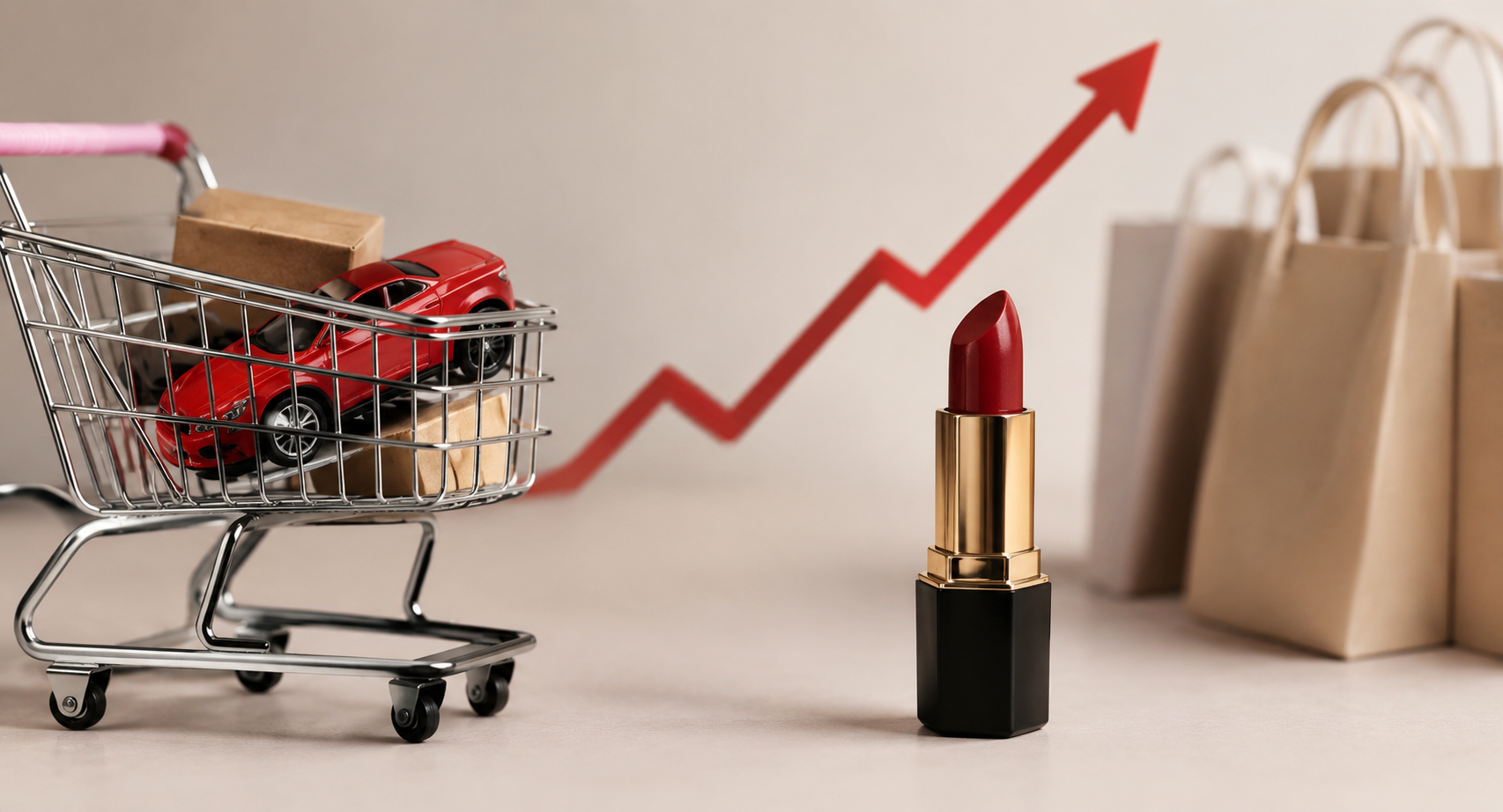
When people face economic challenges and limited resources, since they cannot afford a big-ticket item all at once, they start looking for short-term, satisfying pleasures instead. According to Forbes, this happened in 2001, when Estée Lauder’s chairman, Leonard Lauder, noticed something strange.
As sales of big-ticket items dropped, lipstick sales went up. People stopped buying cars and other large purchases, but lipstick sales kept going just as strong as before. This came to be known as the lipstick effect. People bought a $20 lipstick instead of a $200 handbag or a coffee out instead of a vacation. These are small, affordable indulgences that still deliver a little comfort, a little normalcy, without the risk of a big purchase.
Even when life gets harder, people still want to feel okay and satisfied. This is exactly what keeps someone trapped in the cycle of poverty. They just find smaller, cheaper ways to get there. In a way, that is a shape of poverty premium.
The Cycle of Poverty Keeps Spinning!
Put all of this together, and you get what economists call the cycle of poverty, a loop where being poor makes it structurally harder to stop being poor. The cycle of poverty can continue even when someone is working hard and making careful decisions. It works like this:
- Say someone has no savings.
- Their car breaks down, or a medical bill shows up out of nowhere.
- With nothing saved, they are forced to borrow money at a high interest rate just to cover it.
This is how the cycle of poverty becomes harder to escape: one unexpected expense creates debt, and that debt makes the next emergency even harder to handle. Now next month’s paycheck has to go toward paying off that debt, which means there is even less left to save. So when the next emergency hits, they are right back in the same spot, borrowing again.
And the whole time, the poverty premium is working against them in the background too, adding another layer to the cycle of poverty. a bit more interest here, a pricier prepaid bill there, and furniture they are still paying off month by month. That money adds up, and it is money that could have gone toward something better, like savings for emergencies, a class that leads to a better job, or a deposit on a nicer place to live. Instead, it just keeps feeding the same cycle.
Conclusion: Breaking the Cycle of Poverty
Understanding the poverty premium means looking beyond individual choices and seeing the systems that make everyday life more expensive. That shift matters because it points to real solutions. It is less like one bad decision and more like running on a treadmill that is tilted slightly uphill. Every step costs more energy than it should, and just staying in place takes real effort.
Poverty means more than a lack of money. It means paying more and getting less, over and over, in ways most people never even notice, unless they are the one living it. This is the real cost of being poor that needs real change: not by judging people from the outside but by actually seeing what they are up against.