Why Is Becoming a Trillionaire Dangerous for the World?
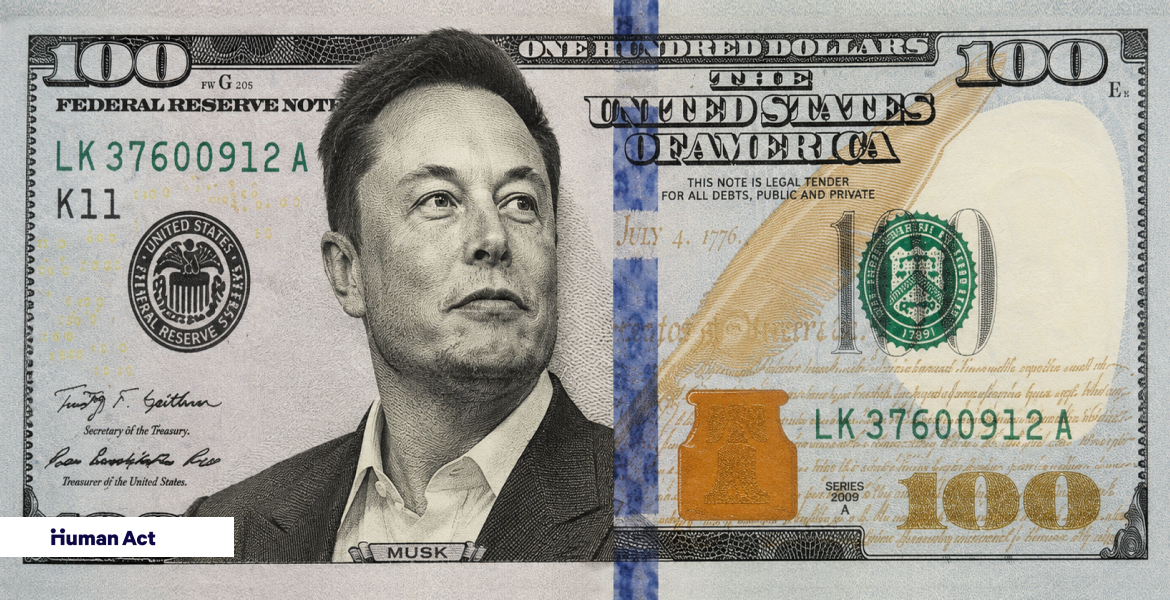
These days, whenever you hear the word “trillionaire,” one name probably comes to your mind: Elon Musk.
News that Musk has become the world’s first trillionaire has started many discussions. While many people see it as an incredible business success, others believe it raises serious questions about wealth inequality and extreme wealth concentration.
The issue is not whether that individual has the right to become wealthy to that level. The main issue is, when wealth is concentrated in the hands of a select few, what will happen to the rest of the people? How is this going to impact the economy and people’s daily lives?
Let’s discuss these questions together.
How Much Is a Trillion Dollars?
Many of us still lack a clear and tangible image of a billion dollars, let alone a trillion! This number is so vast that the human mind struggles to fully grasp it.
To understand it better, consider a simple example:
- A million seconds is about 11.5 days.
- A billion seconds amounts to roughly 32 years.
- A trillion seconds is more than 31,000 years!
In other words, if we had started counting seconds before humans learned how to farm, we would only be reaching one trillion seconds today!
Here is another example: if someone were to work 70 hours a week, without a single day off, from the age of 20 to 75, they would need to earn approximately $5 million per hour to reach one trillion dollars. Yet, we know that the hourly earnings of most people around the world do not even reach 10 dollars.
Therefore, when we speak of a trillion dollars, we cannot simply call it “a lot of money,” because millionaires and billionaires already have a lot of money. We are discussing a level of wealth that is both unimaginable and incomparable to the lives of ordinary people.
Why Is Such Vast Wealth a Cause for Concern?
Having a lot of money is not bad by itself. Every society needs entrepreneurs, investors, inventors, and people who build successful businesses. The problem arises when wealth is distributed very unequally among people.
When a vast portion of the world’s wealth is concentrated in the hands of a few people, a phenomenon known to economists as “Wealth Inequality” arises. While a single person can possess a trillion dollars, millions of families around the world struggle to afford food, housing, healthcare, and education for their children. As the gap between the wealthy and everyone else widens, opportunities become increasingly unequal.
A society with a vast class divide is usually neither peaceful nor stable.
Is All This Wealth Really Earned Through Work?
Many argue that if people become ultra-wealthy, it is solely the result of their own efforts. While hard work, creativity, and taking risks certainly play significant roles, they are not the whole story.
When someone owns vast amounts of capital, after some time, their money generates more money for them without the slightest need for effort:
- Stock values → Rise
- Real estate → More valuable
- Investments → Profit returns
- Large corporations → Greater profits
Consequently, wealthy individuals grow ever wealthier, even if they work the same amount as before. In contrast, those without big money are forced to rely solely on income from their labor. For this reason, the gap between these two groups widens every year.
Some economists call this situation “Extreme Wealth Concentration,” which means a large portion of the world’s assets is held by a very small number of individuals, rather than being distributed among millions of people.
Does Great Wealth Help the Economy?
For years, there has been an idea that if the wealthy have more money, everyone ultimately benefits. This theory is known as “Trickle-Down Economics.” Let’s take a closer look at whether it is true.
1. Reduced Opportunity & Wasted Potential
New research shows that the benefit for all people is not always the case. When most of the money stays with very rich people, ordinary families will have less money for school, healthcare, buying a home, or starting a business.
Because of this, many talented people never get the chance to reach their full potential. A talented teenager might never become a doctor, engineer, or entrepreneur simply because their family lacked the necessary funds.
2. Slower Economic Growth
If ordinary people spend less money, businesses sell less, and the economy grows more slowly. That is why many researchers believe that extreme wealth inequality does not only hurt poor people but also the whole economy.
3. Concentration of Political, Media & Social Power
The biggest danger of having a trillionaire is the power that comes with it. A person with so much wealth can directly and easily control the media and what people think. They can support their preferred politicians with money, run social media platforms, and influence laws that affect everyone.
Have you ever noticed how many major media platforms billionaires own? For example, Jeff Bezos owns The Washington Post, Mark Zuckerberg controls Meta, and Elon Musk owns X.
If a country’s leaders make decisions based on the direct opinion of the wealthy, people will soon stop trusting democracy. Democracy works best when every person’s voice is important, not just the voices of people with more money.
4. Environmental Impact & Climate Change
Ultra-wealthy people also own companies in areas like energy, transport, and mining. These companies can produce a lot of greenhouse gases, which make climate change worse.
Moreover, when such companies have a lot of money, they can sometimes influence politicians to stop laws that protect the environment. That is why some researchers say climate change is not only about science but also about how wealth is shared.
What Is the Main Solution?
Some people will always earn more than others, and that is normal. People who build successful companies should be rewarded, but there should be rules to stop too much wealth from ending up in the hands of only a few people.
One way is to make sure rich people pay fair taxes and cannot avoid paying them, particularly the wealth tax, which aligns precisely with wealth redistribution and social justice.
Another way is to make sure companies compete fairly, so one or two big companies cannot control the whole market. Investing more on education, healthcare, and equal opportunities can also give more people the chance to succeed.
The goal of these solutions is not to punish successful people, but rather to ensure the economy creates opportunities for everyone, not just for those who already have great wealth.
Conclusion
Elon Musk or anyone else becoming the world’s first trillionaire shows that more and more of the world’s wealth is being concentrated in the hands of only a few people.
Hard work and innovation are not undeniable, but it is not acceptable that generating such a vast amount of wealth stems solely from effort. A system is at work here, tirelessly generating wealth at a superhuman pace.
The real question is not whether someone is justified in becoming a trillionaire, but whether that level of wealth benefits society as a whole, or only a very small number of people, or even just one individual.